

Insurance customers are researching what they want before they put in for a quote, send a message, or make a call. Making social media for insurance agents an absolutely mission-critical part of your marketing and sales funnel.
This article explores how insurance agents can leverage social media not just to generate leads, but to build the authentic relationships that turn researchers into clients and clients into advocates.
While doing this, it is important to focus on social media platforms that work for your industry. This can be done by testing out different platforms and seeing where your customers are the most active. A platform like Sendible includes features like like social media analytics that give users a one-click overview of engagement across multiple channels.
If you use a feature like that, it can give you a good starting point to decide which channels to focus on or the best times to post for maximum engagement.
According to recent industry research, 74% of consumers now research insurance online before making a purchase decision.
Yet here's the fascinating part: only 25% actually buy an insurance policy online. Most prefer to call an insurance agent before going-ahead with a policy. This "trust gap" represents the sweet spot where social media becomes invaluable for insurance professionals, as part of an omni-channel approach.
The best platforms for insurance agents include Facebook, LinkedIn, Instagram, Threads, TikTok, and YouTube, where agents can focus on simplifying complex topics, engaging with their audience, and establishing trust.
Why is social media important for insurance agents in 2026?
The insurance industry is experiencing a fundamental shift from traditional advertising to establishing authority. Agents need to consistently demonstrate their expertise and prove your value before prospects ever reach out. Social media is the perfect way to do that.
Searches for "insurance near me" have increased by more than 100% in recent years, reflecting consumers' desire for local, trustworthy advisors. Searching for insurance on phones has surged over 50% in recent years.
Social media provides the "local proof" that both Google, AI tools, and AI-centric search answers prioritise when serving results to potential clients.
When someone searches for insurance in your area, social media algorithms, AIs, and search engines don't just look at your website—they consider your entire digital footprint. Your social media presence, reviews, shared content, and engagement all contribute to your visibility.

💡Social media is the critical social proof layer that sits atop your traditional marketing efforts.
Insurance agents doing well in 2026 aren't necessarily those with the biggest advertising budgets — they're the ones who've built genuine authority and trust within their communities, both physical and digital.
What should an insurance agent post on social media?
Here are a few ideas for insurance agents, insurance marketing teams, and social media agencies working with them.
The 80/20 rule: education vs promotion
Most successful insurance agents (and others who rely on content marketing to generate sales leads) on social media follow a simple but powerful content ratio:
- 80% educational content
- 20% promotional.
An 80/20 approach recognises that people don't go on social media hoping to see more ads; they're there to learn, be entertained, or connect with others.
Your educational content should address the real concerns and knowledge gaps your clients face. Consider seasonal risks: as hurricane season approaches, share practical preparation tips that also subtly remind homeowners to review their coverage.
Create "Did you know?" posts that highlight surprising coverage facts. For example, many people don't realise their home insurance might cover hotel stays during repairs, or that life insurance policies can sometimes be used to supplement retirement income.
Educational content serves multiple purposes simultaneously. It positions you as an expert, provides genuine value to your audience, and creates natural opportunities to discuss your services without being overtly salesy.
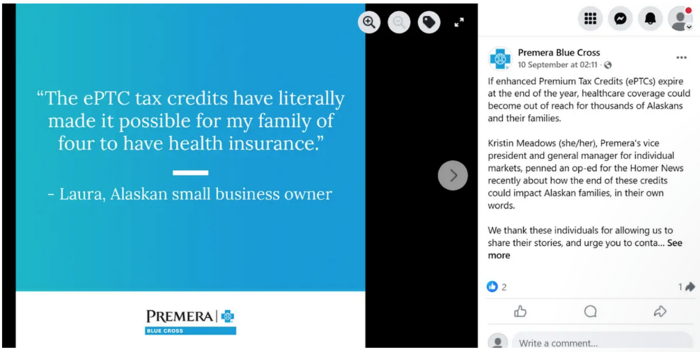
Leveraging short-form video
If you're not yet creating short-form video content, 2026 is the year to start. Platforms like TikTok and Instagram (Reels) have proven remarkably effective for simplifying complex insurance topics—and the algorithm tends to favour this format, meaning your content can reach far beyond your existing followers.
Consider how you might explain "Part D versus Part C" Medicare coverage in a 60-second video. What would take paragraphs of text can be communicated clearly and memorably through visual aids, simple language, and your authentic personality.
Insurance social media content calendar.
💡 The key is to break down one specific concept per video rather than trying to cover everything at once.
Short-form video also humanises your brand in ways static images cannot.
Video content generally generates more engagement than static images.
A "day in the life" video (also known as BTS or POV) showing you meeting with clients, reviewing policies, or explaining your morning routine builds familiarity and trust. Similarly, sharing claim success stories (with client permission and appropriate anonymity) demonstrates real-world value and can be incredibly compelling.

How to introduce yourself as an insurance agent on social media
Your introduction on social media requires a delicate balance between professional credibility and personal authenticity. Think of it as building your personal brand—one that combines your qualifications with your unique story and community involvement.
The "founding story" post is one of the most effective ways to introduce yourself. Share why you entered the insurance industry, like any of the following stories:
- Was it a personal experience that highlighted the importance of proper coverage?
- A desire to help people protect what matters most?
- Perhaps you're a second-generation insurance professional carrying on a family tradition?
Stories like this create emotional connections that credentials alone cannot.
This approach has become even more critical as artificial intelligence enters the insurance landscape. Recent data shows that 61% of customers say AI makes human trustworthiness more important, not less. As automated systems handle more routine transactions, your human qualities — empathy, your story, community connections — become your strongest differentiators.
An introduction should also highlight your professional credentials and specialisations, but frame them in terms of how they serve your clients.
Instead of stating "Licensed in life, health, and property insurance," consider "I specialise in helping young families protect their futures through comprehensive life and health coverage."

Best social media platforms for insurance lead generation
Not all social platforms are created equal for insurance professionals, and trying to maintain a presence across them all is a recipe for burnout. Instead, focus your efforts on the platforms where your ideal clients spend time. Maintaining a consistent brand identity and strong brand recognition across all platforms is crucial for fostering customer connection.
Facebook is the largest social media platform, making it a valuable choice for insurance marketing. It remains remarkably effective for insurance agents, particularly those serving local communities and older demographics.
Insurance social media AI assistant.
The platform's local community groups offer opportunities to establish yourself as a resource without being overtly promotional. Facebook's robust advertising platform also enables precise targeting by age, location, and life events that trigger insurance needs. Insurance agents should maintain a consistent posting schedule of 3 to 5 posts per week on Facebook and Instagram to improve visibility.
Instagram, Threads, and TikTok have emerged as surprisingly powerful platforms for insurance professionals willing to embrace their more casual, authentic nature. These visual platforms excel at humanising your brand and reaching younger homeowners, renters, and first-time insurance buyers.
Lean into each platform's strengths — behind-the-scenes content, quick tips, and personality-driven posts perform far better than formal presentations.
LinkedIn remains the gold standard for B2B insurance professionals and those focusing on commercial policies, employee benefits, or professional liability.
It's where over 1 billion business owners and decision-makers actively seek industry expertise. Share thought leadership content, industry news analysis, and case studies that demonstrate your commercial insurance knowledge.
The most successful insurance agents often maintain a presence on two or three platforms rather than spreading themselves too thin across five or six.
The role of paid ads in insurance social media strategy
While organic content is the foundation of a strong social media presence, paid ads are the accelerant that can significantly boost your results. Paid advertising on social media platforms is a powerful tool that delivers measurable impact.
Social media platforms like Facebook, Instagram, and LinkedIn offer sophisticated targeting options that let you reach your ideal audience based on location, age, interests, life events, and even specific insurance needs. This means you can tailor your message to homeowners shopping for home insurance, small businesses seeking group benefits, or young families considering life insurance.
- Facebook's lead generation ads can capture contact information directly within the platform, making it easy for potential clients to request a free consultation or quote.
- Instagram's visual format is perfect for showcasing your agency's story through eye-catching video content.
- LinkedIn's sponsored content is ideal for reaching business owners and HR professionals with group benefits solutions.
Paid ads also allow you to test different messages, creative formats, and calls to action, helping you refine your social media strategy over time. By monitoring which ads generate the most engagement and leads, you can continually optimise your campaigns for better results.
When combined with a consistent organic presence, paid ads are a cost-effective way to accelerate your agency's growth and achieve your marketing goals.

Managing social media across teams and multiple channels
Let’s consider the most effective ways to manage social media teams across multiple channels, including dozens of profiles.
Challenges of multi-agent or multi-branch social media
For insurance agencies with multiple agents or branches, social media management becomes more complex. Every agent may have their own following and personal brand, yet all represent the same agency.
How do you maintain brand consistency whilst allowing individual personality?
How do you ensure every post meets compliance requirements?
These challenges are significant. Insurance is a heavily regulated industry, and social media posts are subject to the same compliance standards as any other marketing material. It also helps to have every agent pushing the same messages. And yet, not all of them are going to have the time.
Brand consistency presents another challenge. Your agency has worked hard to develop a recognisable identity, messaging framework, and visual style. But when ten different agents post content without coordination, your brand can appear fragmented and unprofessional.
How to streamline workflows
The solution lies in implementing robust workflows that balance compliance, consistency, and autonomy. Start by establishing clear content approval processes. This doesn't mean every social media post requires legal review, but having designated approvers who understand both compliance requirements and brand guidelines is essential.
Centralised scheduling transforms social media management from a daily scramble into a strategic operation. By planning and scheduling content in advance, you can ensure a consistent posting cadence across all channels while freeing up your team to focus on client interactions and business development.
A platform like Sendible enables agencies to manage multiple profiles from a single dashboard, implement approval workflows to catch compliance issues before posts go live, schedule content across all platforms simultaneously, and maintain brand consistency through shared content libraries and templates.
The right tools enable opportunities. When your workflow is streamlined and your team is confident in the approval process, they're more likely to create and share content regularly, multiplying your agency's social media impact.
How can I measure the success of my social media strategy?
Vanity metrics like likes and follower counts feel good, but they don't pay the bills. Effective measurement focuses on metrics that connect to actual business outcomes, especially conversations and conversions.
The most valuable social media interactions are those that spark genuine conversations. Comments, direct messages, and shares indicate engaged prospects actively considering their insurance needs.
Phone calls remain the highest-converting channel for insurance sales. Even recent industry data suggests that phone calls generated from search or social media convert at 10-15X the rate of web leads. This makes call tracking an essential component of your measurement strategy.
Beyond conversations, monitor click-through rates (CTRs) on any links you share. Whether you're directing people to blog posts, coverage calculators, or quote request forms, tracking these clicks reveals which content resonates most strongly with your audience.
Lead attribution provides the ultimate measure of social media success. Whilst attribution isn't always perfect, implementing basic tracking through CRM systems helps demonstrate social media's contribution to your bottom line.
Future-proofing: AI and social media for insurance
Artificial intelligence is transforming social media marketing, offering insurance agents powerful new capabilities while also raising the stakes for human connection.
AI tools can dramatically streamline content creation. Use AI for content ideation — generating topics based on trending searches or seasonal insurance needs. AI-powered sentiment analysis can monitor social conversations about insurance topics, alerting you to opportunities to join discussions or address emerging concerns in your market.
However, AI also changes how people find insurance agents. Emerging AI-powered search tools prioritise different signals than traditional search engines. To ensure visibility in this new landscape, insurance agents must optimise their social profiles for "AEO" (Answer Engine Optimisation).
One crucial AEO practice: ensure your NAP (Name, Address, Phone number) is absolutely consistent across every social profile, directory listing, and web property. AI systems looking to recommend local insurance agents give heavy weight to this consistency as a trust signal.
Additionally, structure your social media content to directly answer common questions. AI tools often pull from social media when generating answers to queries like "What type of life insurance do I need?" Agents whose content clearly and authoritatively answers these questions position themselves for inclusion in AI-generated responses.
The future belongs to insurance agents who embrace AI as a productivity tool whilst doubling down on the human elements AI cannot replicate — empathy, nuanced advice, and genuine community connection.
Pro Tip: Use AI to generate content, but not all of it. 60% of P&C insurers now use AI to draft social content, but the most successful agencies use a "human-in-the-loop" approach, leveraging an AI writing assistant, to maintain authenticity (Source: Guidewire 2026).
Insurance social media: Conclusion
The insurance landscape has transformed, but the fundamental business of insurance—helping people protect what matters most—remains deeply human. Social media doesn't replace the personal relationships that have always driven insurance success; it amplifies them, allowing you to build trust at scale and establish authority before prospects ever pick up the phone.
By following the 80/20 rule, embracing short-form video, strategically choosing your platforms, and implementing robust management workflows, you can transform social media from an obligation into your most powerful business development tool. And by measuring what matters—conversations, not just likes—you'll continually refine your approach for maximum impact.
Try Sendible free with 14-day free trial.
Leverage Sendible’s extensive integrations to create, schedule, publish, and engage with your posts seamlessly.

Text copied!