

Having a strong real estate brand is mission-critical, and you’ve got to communicate this across every social channel. With so many real estate agents and large firms competing for attention, the brands that stand out are the ones that build trust, show clear value, and feel memorable to potential clients.
Whether you’re a solo agent working on your personal brand or leading a team across multiple social media platforms, building a consistent and recognisable brand can turn casual followers into buyers and sellers who trust you with one of the most significant decisions of their lives: Buying or selling a home.
Key takeaways:
- Define your unique selling points and brand values: Instead of generic claims like "exceptional service," identify exactly what problem you solve and who you serve (e.g., "I help growing families in Brooklyn find move-in ready brownstones near excellent schools").
- Implement a content pillar system for a consistent social media presence: Organise your content around 5 to 6 key themes
- Educational content
- Property showcases
- community spotlights
- Behind-the-scenes
- Client stories
- Market insights.
- With each representing 15-20% of your social media content, so that your posts have some variety while reinforcing your brand image.
- Use social media management tools to protect brand consistency at scale: Centralised dashboards with approval workflows ensure all team members maintain brand standards across multiple platforms while allowing individual personalities to shine through.
In this guide, we will walk you through the core elements of an effective real estate brand, practical content strategies, and the tools that make brand consistency easier to manage at scale.
What is the core of a memorable real estate brand?
A strong real estate brand is more than a good-looking logo. It’s the complete impression you create through your messages, your visuals, and your actions. All of this needs to be communicated consistently across the most relevant social media channels for your business. For real estate agents, these channels usually include:
- TikTok
- Google (e.g., SEO and local listings are so important: Google Business Profile (GBP))
Although you don’t need to be on every channel. The main thing is that you’re present on the most relevant platforms for your customers and audience.
Your real estate brand needs to include key elements like:
- Your unique selling proposition (USP)
- Your mission and values
- Your brand voice
- Your visual style and consistency
Your brand is your business’s personality. People connect with brands the same way they connect with people — through authenticity and trust. This is especially important in real estate, where clients make major financial decisions and rely heavily on the professionals guiding them.
The most successful real estate brands are:
- Easy to recognize
- Consistent across channels
- Emotionally engaging
- Clear about who they serve
Whether it’s a luxury agency known for high-touch service or a multi-agent team known for helping first-time buyers, strong brands stand out because they communicate their value clearly and consistently.
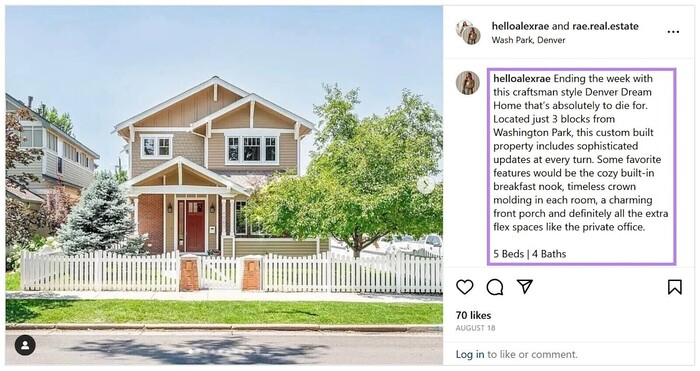
Defining your unique selling proposition (USP)
Your real estate USP is the foundation of your entire branding strategy. In a market where many agents offer similar services, your USP explains what makes you different — and why someone should choose you.
Start by asking yourself:
- What do I do better than other agents in my area?
- What problems do I solve that others don’t?
- What specific value do clients get from working with me?
Strong USPs rely on specifics, not vague claims. Examples:
❌ “I help people find their dream homes.”: Too generic
✅ “I help families in Brooklyn find move-in-ready brownstones near top-rated schools.”: Clear and memorable
Your USP might be based on:
- A specialty (luxury homes, historic homes, first-time buyers, investors)
- A unique service (staging system, off-market network, renovation expertise)
- A niche market (specific neighbourhood, demographic, or property type)
Once defined, your USP should guide the following:
- Your social media content
- How your services are portrayed
- Your messaging through your website and social content
- Your tone of voice (ToV)
- Your visuals, including any videos, Reels, Shorts, and Stories on Instagram (and any videos on TikTok, YouTube, and other channels)
A USP isn’t just something you say — it’s something you demonstrate with results and consistency.
Crafting a clear and consistent brand voice
Your brand voice is how your personality shows up in your writing and communication. It influences everything from your captions to your email tone.
For example:
- A luxury brand may use polished, formal language.
- A youthful, modern brand may use casual, friendly language.
Both are valid as long as they are authentic and consistent.
When shaping your voice, consider:
- Formality: Are you more professional or conversational?
- Energy level: Calm? Excited? Motivational?
- Humor: Do you use it regularly? Do you keep it subtle?
- Complexity: Do you avoid jargon and keep things simple for clients?
Document your voice in a simple guide, including:
- Dos and don’ts
- Sample phrases
- Words to avoid
- Examples of on-brand vs. off-brand messaging
This is especially helpful for teams, assistants, or social media managers who need to accurately represent you.
Why visual identity matters in a scrolling world
You only have a few seconds to catch someone's attention when they scroll through Instagram, TikTok, or Facebook. Your visual identity helps people recognize your content instantly — even before they see your name.
Your visual identity includes:
- Colours
- Fonts
- Logo
- Photography style
- Layout templates
Strong visual identities create a cohesive look across all platforms. This visual consistency helps potential buyers or sellers decide: “This is a real estate agent I want to follow.”
Once they’re following you on social media channels, it's more likely they’ll see your listings or get in touch when they’re ready to sell their home. Renters also follow realtors on social media, so this is another channel to get rental clients, too.
Colour psychology matters too:
- Luxury brands often use black, gold, and jewel tones (with some subtlety, though; pitch this audience appropriate)
- Family-focused brands use warmer, softer colors.
- Modern brands lean into clean whites and minimalist neutrals.
Even more important than the exact colors or fonts is consistency. Matching templates, similar photo editing styles, and repeating layouts help people instantly identify your posts.
To make this easier:
- Create templates for market updates, listings, tips, and testimonials.
- Define your brand color codes and font styles.
- Keep photography editing consistent across platforms.
Your audience should recognise your content before they even read the caption.
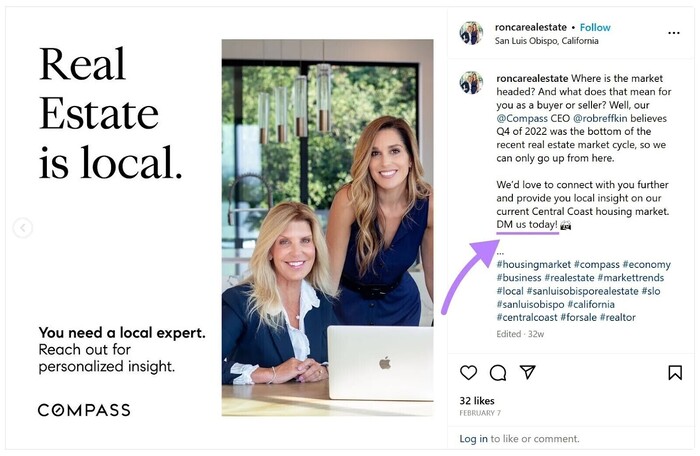
How do real estate teams build consistent social media brands?
Brand consistency is hard for individual agents — and even harder for teams, multi-location businesses, and franchises. But teams that manage it gain a major advantage. The challenge lies in giving agents the freedom to show their personal style while still keeping the team’s brand unified and professional.
The solution is clear frameworks, strong systems, and the right tools.
Standardise branding across all agent profiles
A centralised brand guide is essential for team consistency. This guide should include:
Visual standards:
- Approved logos and usage rules
- Exact brand colours
- Font families and sizes
- Photography guidelines (lighting, filters, styles)
Messaging framework:
- Core values
- Sample taglines
- Brand voice examples
- Approved hashtags
- Templates for common posts (introductions, listing announcements, market stats)
Resource library:
- Logo files
Social media templates - Branded headshots
- On-brand stock photos
- Pre-written captions that agents can personalise
Giving agents everything they need to stay consistent while adding their own voice.
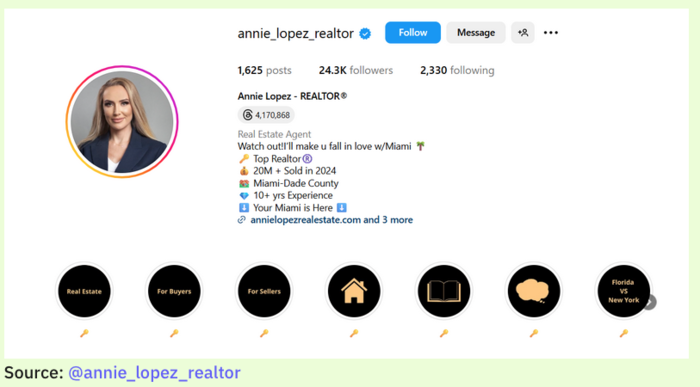
Create a strategic content pillar system
Content pillars keep your posts varied, engaging, and aligned with your brand. They also simplify planning. Some of the most common and useful content pillars for real estate include:
- Educational content
- Buying/selling tips
- Mortgage breakdowns
- Neighbourhood guides
- Property showcases
- Listings
- Sold stories
- Virtual tours
- Community spotlights
- Local businesses
- Events
- Neighbourhood highlights
- Behind-the-scenes content
- Team moments
- Workday snapshots
- Client success stories
- Testimonials
- Case studies
- Market insights
- Local trends
- Price movements
- Forecasts
Aim for each pillar to make up roughly 15% to 20% of your content. This keeps your online presence balanced and fresh. You can also assign different agents to lead specific pillars based on their strengths.
Measure success beyond likes and comments
Vanity metrics like likes or follower counts don’t tell the whole story. Nor are they what brings the money in. Better indicators of brand strength include:
Brand awareness:
- Branded search traffic
- Direct website visits
- Reach and impressions
Engagement quality:
- Shares
- Saves
- Comment depth
- Profile visits
- Link clicks
Business results:
- Leads from social media
- Cost per lead
- Inquiry-to-consultation conversion rates
- Client source data
Create a monthly brand health report to track these metrics and identify trends. Focus on long-term patterns instead of day-to-day changes.
Unlock your advantage: Real estate social media marketing plan.

What are the most effective content types for real estate branding?
Certain content types consistently perform well because they educate, entertain, and build emotional connections — all key aspects of social media marketing brand building.
Here are the top formats that help real estate brands grow.

Real Estate Social Media Strategy: A Comprehensive Guide & Template
Leveraging hyper-local content for community authority
Buyers don’t want generic advice. They want information about the specific areas they are considering.
Hyper-local content can include:
Neighbourhood spotlights
- Home prices and trends
- School district info
- Parks, restaurants, and shopping
- Upcoming developments
Local business features
Partner with cafes, salons, gyms, or shops. Create content showcasing these businesses and tag them to boost reach.
Hidden gems
Share things only locals know:
- Best playgrounds
- Scenic walking routes
- Local bakeries or family-run restaurants
Seasonal events
Attend community events and share videos or photos. This shows that you're not just selling homes — you’re an active part of the community.
Hyper-local content:
- Builds authority
- Attracts buyers interested in your area
- Creates shareable posts
- Encourages long-term engagement
Need more resources: Unlock templates, audits, and strategies here.
The power of video in modern property showcasing
Video is the most potent content format today. Platforms like Instagram (Reels and Stories), TikTok, and YouTube Shorts reward accounts that post regularly.
Effective video types include:
Property walkthroughs
Keep them short and engaging:
- Smooth room-to-room transitions
- Top features shown in the first few seconds
- On-screen text for silent viewers
- Music matching the home’s vibe
Educational videos
Examples:
- “How to prepare your home for sale.”
- “What to expect at a showing.”
- “How closing costs work.”
Day-in-the-life content
Also known as Point of View (POV), this is very popular across loads of professions, including real estate. Show people what your daily work is like, the good, the bad, and the ugly (to a point). Authenticity builds trust.
Before-and-After Videos
Great for showcasing:
- Staging
- Renovations
- Organisation and cleaning
Consistency matters more than perfection. Regular, helpful videos will outperform polished but infrequent ones.

Using client stories and testimonials as social proof
Buying or selling real estate is built on trust, and client stories help build that trust quickly. The types of social proof you can offer include, but aren’t limited to:
12 Best Social Media Management Tools for Real Estate Agencies
Video testimonials
These feel more personal and authentic than written ones.
Written testimonials
Encourage clients to be specific:
- What challenge did they face?
- How did you help them?
- What was the outcome?
Full case studies
Tell the whole journey from starting to look or getting a home on the market to completing the sale (either from the buyer or seller perspective, depending on who your client was).
Milestone celebrations
Show moments like:
- First-time buyers getting keys
- Families moving in
- Real estate Investors hitting their goals
Always get permission before sharing client content and offer options for partial anonymity if needed.
How can social media management tools simplify brand consistency?
As your brand grows, managing social media manually becomes overwhelming. Social media management tools help you:
- Save time
- Stay consistent
- Maintain quality
- Protect your brand
- Measure performance
- Manage multiple accounts at once (as many as 1000s in one go).
Streamlining cross-platform content publishing
Different platforms have different formats and best practices. A robust and user-friendly social media tool lets you:
- Create content once
- Adapt it for multiple channels
- Write platform-specific captions
- Schedule posts for optimal times
- Keep everything organized in one place
A content calendar helps you visualise everything so you maintain a balanced mix of pillars. This is especially helpful for real estate, where the best posting times often conflict with showing schedules or closings.
Implementing an approval workflow for brand safety
Approval workflows help teams avoid off-brand or legally risky content. With an approval system:
- Real estate agents create draft posts
- Team leaders or social media managers review them
- Edits are suggested before anything goes live
This protects the brand by:
- Catching mistakes
- Preventing off-brand messaging
- Ensuring legal compliance
- Teaching agents how to follow guidelines
You can set rules for fast approval on simple posts and slower review on sensitive content.
Managing multiple agent accounts from one dashboard
Teams often need to manage many accounts at once — one for the team and one for each real estate agent. A centralised dashboard allows you to:
- Publish and schedule simultaneously
- Monitor all accounts
- Respond to comments and messages
- Review performance across the team
- Keep branding aligned
- Share assets quickly
- Push updates instantly
None of the above limits real estate agents; it supports them. Leaders can use social media performance metrics to identify top performers, share best practices, and maintain a consistent team online presence.
Analytics tools also help track performance at the team level, giving leaders a more complete picture of brand reach and ROI.
Conclusion: Building a Brand That Closes Deals
A powerful real estate brand is more than a nice Instagram feed. It’s the reason clients choose you over the competition. Every element of branding — from your USP to your content pillars — supports the same goal: building trust and driving business.
Strong real estate brands:
- Are consistent
- Understand their audience
- Deliver on their promises
- Build emotional connections
- Stay recognisable across all platforms
Start by defining who you serve and what makes you different. Then apply those insights to everything you create and every client interaction.
For teams, the opportunity is even greater. Clear guidelines, strong systems, and the right tools allow each agent to become a trusted brand ambassador.
Over time, your brand becomes a compounding asset. As your content expands, your community grows, and your reputation strengthens, you attract clients who already trust you before the first conversation.
If you’re ready to take your branding to the next level, tools like Sendible can help streamline content creation, unify team branding, and simplify social media management — so you can focus on serving clients and closing deals.
Why real estate professionals and multi-agent firms choose Sendible:
- Permission management from Sendible allows real estate agents to maintain consistent posting by giving social media posting permissions to their management company. This also allows admins to assign team members to specific calendars and features depending on the tasks they are responsible for. This reduces confusion and helps maintain clarity across the board.
- Custom tags and profile lists allow social media management teams to post the same message across different social platforms and then personalize it for different real estate agents.
- Approval workflows help ensure everything is reviewed and approved in the right order before being published.
- Sendible's flexible pricing options allow teams to scale as their needs grow based on their budget at that moment.
- Smart compose box allows you to edit content for each social platform in one go.
- Client connect allows realtors to give social media management access to profiles and lets them post on social media in their place.
- Google Business Profile scheduling automates article publication. It also allows you to schedule updates on listings through the platform.
- Visual scheduling excellence allows you to plan your content mix with a clear view of how your feed will appear to potential clients.
- Team collaboration lets multiple team members add content whilst keeping the approval processes simple.
- Custom reporting means creating professional reports to show how your social media drives lead generation all within the same platform you use for scheduling the posts.
- Content library storage includes property images, headshots, and marketing graphics in one organised space.
Try Sendible free with 14-day free trial.
Leverage Sendible’s extensive integrations to create, schedule, publish, and engage with your posts seamlessly.

Text copied!