

In 2026, businesses face a critical choice about social media platforms: Threads vs. X (formerly Twitter).
In 2025, Threads became a major force, while X struggled with an exodus of users and advertisers. Choosing the wrong platform wastes resources. It causes you to miss your audience and compromises brand safety.
We already know the clear winner for organic growth: Sendible achieved a 30,000% increase in Threads views in three months.
In the recent Sendible trends report, we found that engagement and posting volume increased by 300% on Threads during 2025. This growth has continued in 2026, and we expect Threads to keep growing.
This comprehensive Threads vs X 2026 guide dives deep into business use cases, audience demographics, and ROI potential to provide the definitive answer on which platform your business should prioritise to succeed this year.
TL;DR: 30-second verdict: Threads vs X
- Threads is safer for brands and communities, more supportive and more engaging, and its user base continues to grow exponentially.
- X (formerly Twitter) has long since lost everything that made it worth using for consumers and businesses, and in most cases, isn’t brand-safe or even safe for the majority of users who once called it home.
- If you aren’t already on Threads, this is your sign to join, either for yourself or for businesses/brands you’re managing as a social media professional.
Threads vs X: Key strategic takeaways
Platform maturity:
- X offers established business tools and advertising infrastructure.
- X has around 557 million monthly active users (MAUs), although there’s reason to believe that number is inflated or out of date, as other stats show 388 million.
- Threads is becoming increasingly popular, with 500m MAUs.
Audience dynamics:
- X (formerly Twitter) continues to host diverse communities. But many people have either left (deleted the app, deleted their accounts, or logged out) or aren’t using it as much.
- Threads attracts younger users from Instagram. These users prefer a safer and more inclusive environment. The 25–34 age group is the largest on Threads (28.75%). (Source: Buffer; most recent data).
Business features:
- X provides comprehensive analytics, scheduling, and multi-account management.
- At present, Threads offers basic tools with Instagram integration.
Advertising ecosystem:
- X's Ad platform is mature but changing (not for the better).
- Threads leverages Meta's sophisticated advertising infrastructure.
Content environment:
- X favors real-time news and political debates, but, unfortunately, has become a very negative space that increasingly leans far right.
- Visual content and community conversations do very well on Threads, as do “threads” that go viral.
- Threads drives 73.6% higher engagement than X (Source: Buffer; most recent data). Take a look at our own study to see how to succeed on Threads.
Multi-Location management:
- X offers better tools for managing multi-location business accounts.
- Threads can offer multi-location management through Instagram Business Suite integration.
Cost considerations:
- X has subscription tiers and an ever-changing algorithm that affects reach, engagement, and features.
- Threads remain free with organic reach advantages.
Future outlook:
- X faces continued uncertainty amid platform changes.
- Threads benefits from Meta's resources and strategic integration
Threads vs X at a glance: Comparison table
This is a feature breakdown of what they mean for businesses and social media managers:
|
Feature |
Threads |
X (Twitter) |
Business Impact |
|
Character limit |
500 |
280 (25k for Blue) |
Threads allow more storytelling |
|
Monthly active users (MAUs) |
500 million (as of June 2026) |
Between 388 and 557 million |
X has more users, but what’s better for your brand: quality or quantity? |
|
DMs |
Yes |
Yes |
Both are equally good for customer service |
|
Hashtags |
Yes |
Core feature |
X was better for discoverability, but now Threads is equally as good, if not better |
|
Chronological feed |
Yes |
Limited |
Reach on Threads is more predictable |
|
Ads |
Meta Ads integration |
X Ads platform |
Both offer targeting options |
|
Analytics |
Native + third-party |
Native + third-party |
Analytics insights are comparable |
|
Verification |
Meta verification |
Blue checkmark ($8/month) |
Different credibility signals |
|
API access |
Limited, with some social media tools giving automated access |
Yes, with paid tiers, or access via social media tools |
X is better for automation |
|
Content types |
Text, images, videos, links |
Text, images, videos, audio, links, Spaces |
Similar content options: Threads is more organic, less algorithmically governed |
Now, let’s compare X (Twitter) and Threads in more detail.
Key differences in the Threads vs X comparison for 2026
In this section, we’ll compare Threads and X for several key factors that impact businesses and users in 2026:
- Audience and community culture
- Content and algorithm
- Audience demographics
- Platform health and brand safety
Audience and community culture
Threads atmosphere:
- An Instagram-adjacent (not everyone on Instagram has joined Threads, yet) community with emphasis on lifestyle, personal branding, and a more enjoyable social media environment
- Much lower toxicity levels due to stricter moderation and a newer user base
- Casual, meme culture that rewards authenticity over authority. It’s not a place to be too serious, and politics isn’t talked about as much (and when it is, the audience is largely liberal).
- Comment threads tend to be more supportive and constructive. More like how Twitter was many years ago.
- Brand interactions feel more natural and less transactional.
X ecosystem:
- It’s still a fast-paced, news-driven environment
- However, it’s become a much more negative environment since Musk bought it
- Political discourse and breaking news dominate trending topics (and the commentary leans right-wing)
- Higher engagement rates, but also a much higher risk of negative backlash, even from posts that aren’t meant to be controversial
- A much more confrontational culture where brands constantly need to navigate carefully
- Legacy reputation as the platform for real-time commentary. That reputation is being diminished as it becomes less appealing, and the algorithm has largely taken away the real-time nature of when posts are seen.
Threads vs X: Content experience and algorithm impact
Threads content strategy
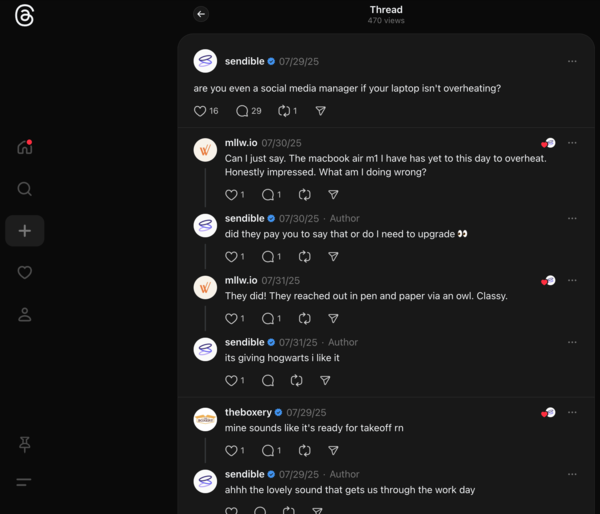
- The more light-touch algorithm prefers engagement quality over quantity
- Text-only posts receive surprisingly high visibility compared to other platforms (although pictures do very well, too)
- A slower pace of content consumption leads to deeper engagement with brands. People aren’t doomscrolling, so there’s a better chance of genuine engagement
- Cross-posting from Instagram can also help boost your initial reach
- Less content saturation means individual posts have better organic reach
X content dynamics:
- The algorithmic timeline creates unpredictable reach patterns. It no longer functions as a real-time source of news and world events as they happen
- Trending topics can provide massive exposure, but require perfect timing
- Higher content volume means the audience has less of a chance of seeing your posts
- However, reply threads (where you reply as a brand, or your customers reply to your posts) can significantly extend the content's lifespan
- Premium features (Blue subscriptions) can boost content visibility and engagement rates
Audience demographics and behaviour
Threads users:
- Threads currently has 500 million monthly active users (MAUs)
- Mainly Gen Z and younger Millennials (18-34)
- A higher concentration of lifestyle, wellness, and creative professionals
- Users migrating from Instagram prefer a visual-first experience (but don’t always post the same content on both: people treat Threads differently from Instagram)
- More open to brand personality and behind-the-scenes content
- Engagement patterns favour sustained conversations over quick reactions
X users:
- X currently has between 388 and 557 million MAUs
- Broader age range, now leaning towards an older demographic
- Lots of journalists, tech bros, crypto fans (lots of overlap between those groups), and political figures
- Users expect real-time information and rapid responses from brands
- Brands still use it as a customer service and support request channel
- Users have a higher tolerance for promotional content when it is contextually relevant
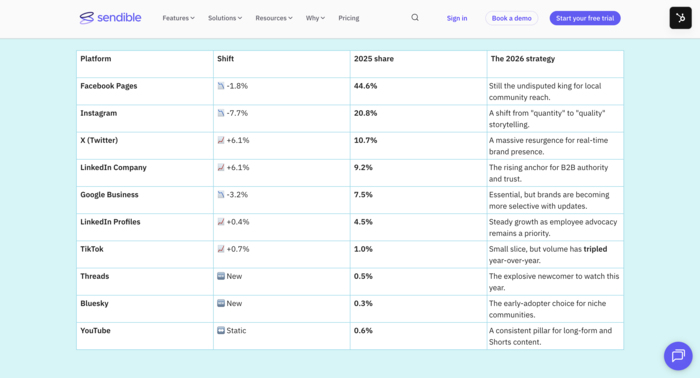
We also noticed an increase in Sendible users posting to X, according to our recent Sendible trends report, which points to the growing importance of social media strategies for building their presence on the platform. This is highlighted in the table below:

Platform health and brand safety
Threads Advantages:
- Stricter content via Meta's albeit smaller moderation teams, still making it a noticeably safer environment
- Much lower incidence of harassment, misinformation, fake news, and AI-generated content (aka scams)
- A much cleaner brand environment with fewer controversial associations
- Growing on Threads, advertiser confidence is much greater because it’s a safer content environment
X Challenges:
- Ongoing moderation concerns affecting brand safety
- Most moderators were fired after Musk bought the platform
- Advertiser exodus is impacting platform stability, and that’s continued in 2026
- Negative association with controversial content creators
- Unpredictable policy changes affecting business accounts
Is Threads or X better for B2B marketing in 2026?
In this section, we’ll compare Threads and X for the following:
- Community building
- Top-of-funnel brand awareness
- Local and lifestyle content
- Customer service
- Event commentary
- Giving brands an edge
Where Threads already wins:
Threads for community building and brand personality:
- A longer character limit allows for storytelling and thought leadership
- A lot less saturated environment means brand voices can stand out
- Users are more receptive to authentic, personality-driven content
- Cross-promotional opportunities with Instagram and Facebook (will work even better if Meta posts those more frequently and in real-time)
- Better suited for lifestyle brands and service-based businesses
Threads for Top-of-Funnel (TOFU) brand awareness:
- High organic reach potential, which is better for engaging content
- Users are in discovery mode rather than just news consumption, so not a place where people simply “doom scroll.”
- A less competitive environment, which makes it easier to capture attention
- Ideal for sharing authentic company culture and values (remember, comedy wins every time; this isn’t LinkedIn)
- More effective for recruiting and employer branding initiatives
Threads for local and lifestyle content:
- Community-focused conversations that are more aligned with local business goals
- Less noisy environment, so better for location-specific content (so is the algorithm)
- Users are more likely to engage with relatable, everyday content (again, go for funny, or at least interesting)
On the other hand, X still has some advantages that brands need to remember.
X is still better for:
Advanced search capabilities:
- X lets you go beyond the basic search bar and use advanced search to refine your search criteria.
- Some advanced search capabilities include keyword and hashtag targeting, user-targeted search, or even sentiment analysis.
Event commentary, private conversations, and trending engagement:
- Unmatched for live event coverage and real-time updates
- Trending topics provide opportunities for viral content
- Going viral is still possible on X (it has a much larger audience than Threads)
- Users still actively seek breaking news and industry updates
Brand voice with an edge:
- Culture rewards wit, humour, and clever responses
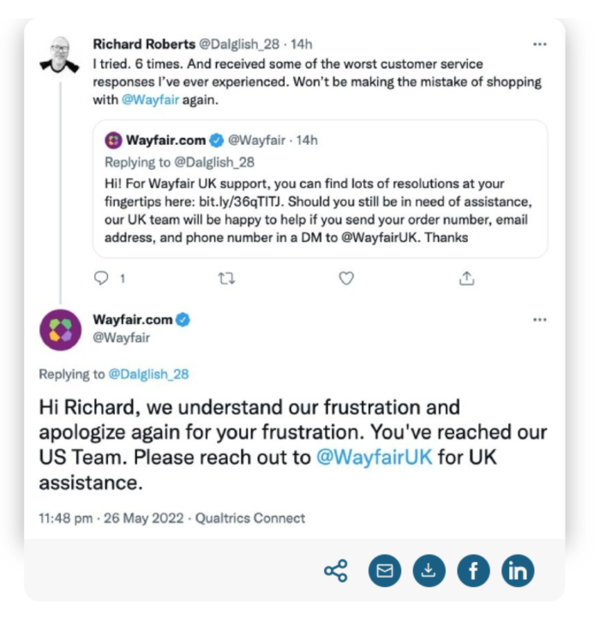
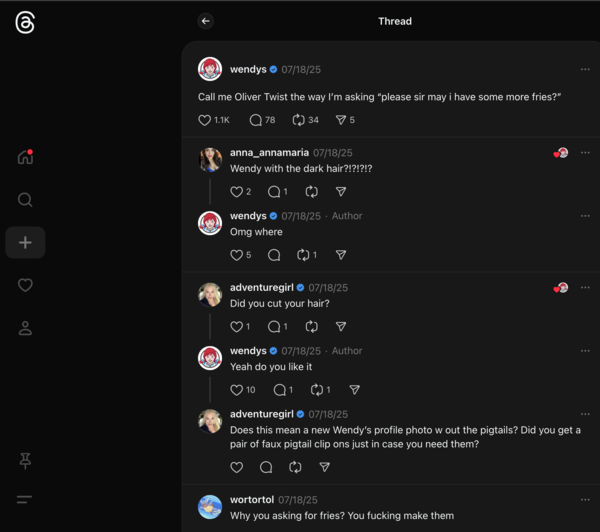
- Opportunity for brands to show personality through quick responses. Some brands still do very well (e.g., Aldi and M&S, or Wendy's)
- Effective for engaging with industry conversations and debates
Now we need to think about both from a multi-location perspective. So, if you are a business with multiple locations, then this is a very important consideration.
Multi-location businesses and brands: Threads vs X
Threads' limitations: User engagement factors to consider.
- No native location-targeting features (yet)
- Requires manual community building for every location
- Limited scheduling and automation tools. You can schedule for Threads through Sendible
- Harder to scale customer service across multiple locations
X advantages: The platform also benefits from creator ad revenue-sharing initiatives, enhancing profitability.
- Robust third-party tool integration for multi-location management
- Advanced search functionality that includes local mention monitoring
- Established local business discovery patterns
- Analytics for measuring location-specific performance
- Existing customer expectations for local business presence
Threads vs X: Which platform has better reach for business accounts?
For social media managers, your Threads strategy depends on how the algorithm works, as it does on every platform. All of this impacts how businesses perform on each platform.
Setting measurable social media goals is more manageable when you understand how a platform's algorithm works.
Thankfully, Threads has been open about this, making it easier for businesses to succeed. Here is what you need to know:
- AI-driven discovery drives the For You feed;
- Whereas, the Following feed is chronological;
- Content that’s popular on the Following feed will appear in more people’s For You Feed (FYF);
- Popularity is based on engagement signals and how useful a post is to an individual user (based on other content they’ve engaged with already);
- Providing genuine value, like education, being entertaining, or problem-solving, is ranked much higher;
- Threads is not X: Engagement-baiting, doom scroll-type content, and anything harmful to users does not work on this platform. It was specifically designed to be the anti-X, and it’s working.
- Interactions on Instagram and Facebook directly impact what people see on Threads. So, if you’ve got active profiles on those platforms (especially Instagram), that will help you grow a brand/business on Threads.
- Threads is part of Meta’s Fediverse, integrating Threads with “ActivityPub-compliant servers (like Mastodon) and enabling people on those servers to follow them, like, reply to, and repost their posts.”
Naturally, as new Threads features emerge, the algorithm will evolve with them.
Threads vs X: Which is better for different sectors?
In this section, we’ll compare Threads and X for the following multi-location businesses:
- Real estate agents
- Dentists
- Car dealerships
- Restaurants
Real estate agents
- Market insights and neighbourhood insights
- Agent personality and expertise showcasing
- Home staging and design inspiration
Quick win: Customer success stories and testimonials could be done in video/story format. More authentic, more likely to help you win new customers.
X strategy:
- Breaking real estate news and market updates
- Live open house announcements and virtual tours
- Mortgage rate alerts and financial tips for new buyers
- Quick responses to buyer/seller questions (DMs)
Quick win: Industry networking and referral building
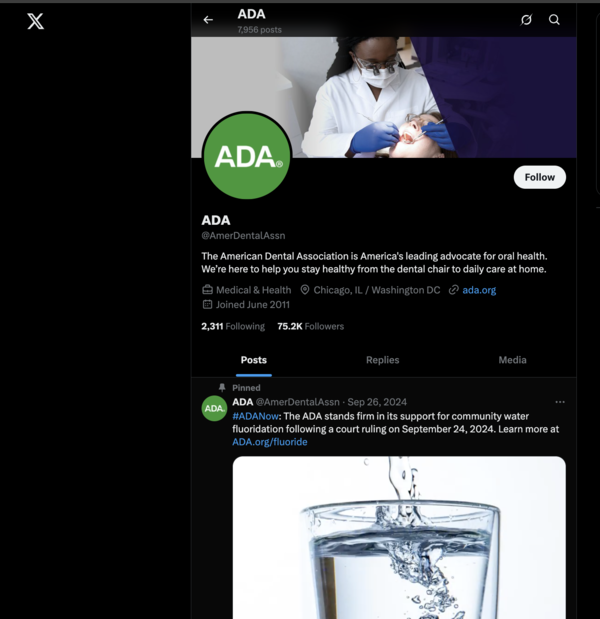
Dentists
Threads strategy:
- Educational content about oral health habits for every age group
- Meet the team and behind the scenes
- Patient transformation stories (with permission); video or story format would work well
- Dental myths “de-influencing” and friendly dental advice
Quick win: Community health initiatives and involvement. Authenticity is really important for patients, making this the ideal platform for that.
X strategy:
- Appointment availability and scheduling updates. Make sure to use every social media channel and your website for this, too
- Emergency dental care announcements
- Quick tips for dental emergencies
- Responding to patient concerns and questions
Quick win: Sharing local health news and community events
Car dealerships
Threads strategy:
- Meet the team and behind the scenes
- New model arrivals and feature explanations
- Customer testimonials and positive reviews
- Community involvement and sponsorship activities
Quick win: Short, video-based car care tips and maintenance advice (especially seasonal, like winter)
X strategy:
- Car inventory updates and special discounts/sales announcements
- Service department promotions and reminders
- Manufacturer recall notices and important safety information
- Quick responses to sales questions (DMs)
Quick win: Industry news and manufacturer updates
Restaurants
Threads strategy:
- Meet the team, from Head Chef through to the bar, waiting team, and Front of House
- Food pics and specials (time-sensitive)
- Seasonal ingredient sourcing stories
- Community involvement and local partnerships
Quick win: Behind-the-scenes kitchen content (who doesn’t love food pics and videos, right?!)
X strategy:
- Daily specials and menu updates
- Event hosting and reservation information
- Addressing customer feedback and complaints
- Weather-related closures or delays
Quick win: Catering availability and corporate partnerships
Now, when it comes to social media, most brands take a multi-platform approach, including Facebook and Instagram (if you aren’t already). But whether to use Threads and X together- that’s a tougher question.
Final verdict: Choosing between Threads vs X
💡There is a strategic case for a dual platform presence
In reality, most businesses would benefit from a dual platform approach if bandwidth allows.
Threads serves long-term brand building, whilst X handles immediate customer needs and trending conversations. The key is understanding that these platforms serve different functions in your marketing funnel rather than competing for the same outcomes.
As long as your marketing people or social media freelancer can handle both, then we’d recommend going this route.
Unless you no longer feel X (formerly Twitter) is suitable or safe for your brand, stick to Threads, Instagram, and Facebook.
Content repurposing opportunities:
- Edit and repurpose longer Threads posts into a Twitter thread
- Use X conversations to create longer-form Threads content
- Cross-promote platform-specific content to maximise reach
- Use images or videos for both
- Test content performance across both platforms to optimise strategy
Implementation framework
Threads for brand building:
- Focus on storytelling and thought leadership-style content
- Share company culture and engaging behind-the-scenes moments
- Take part in industry conversations with nuanced perspectives (not witty put-downs, unless the situation calls for it; Threads is a much nicer, kinder environment than X)
- Build genuine relationships with community members
- Experiment with various content formats in a less saturated environment
X for immediate impact:
- Handle customer service and support questions (treat it like an extension of your Live Chat, and make sure conversations are logged in your CRM)
- Share time-sensitive updates and announcements
- Participate in trending conversations relevant to your industry
- Monitor brand mentions and respond promptly
- Leverage breaking news for content opportunities whenever possible (Coldplay; need we say more!)
Measurement and optimisation
Use platform management tools like Sendible to track performance metrics across both platforms and facilitate real-time discussions.
Monitor engagement rates, reach, and conversion metrics to determine which platform delivers better ROI for specific content types and business objectives.
Adjust your social media resource allocation based on data-driven insights rather than platform preferences.
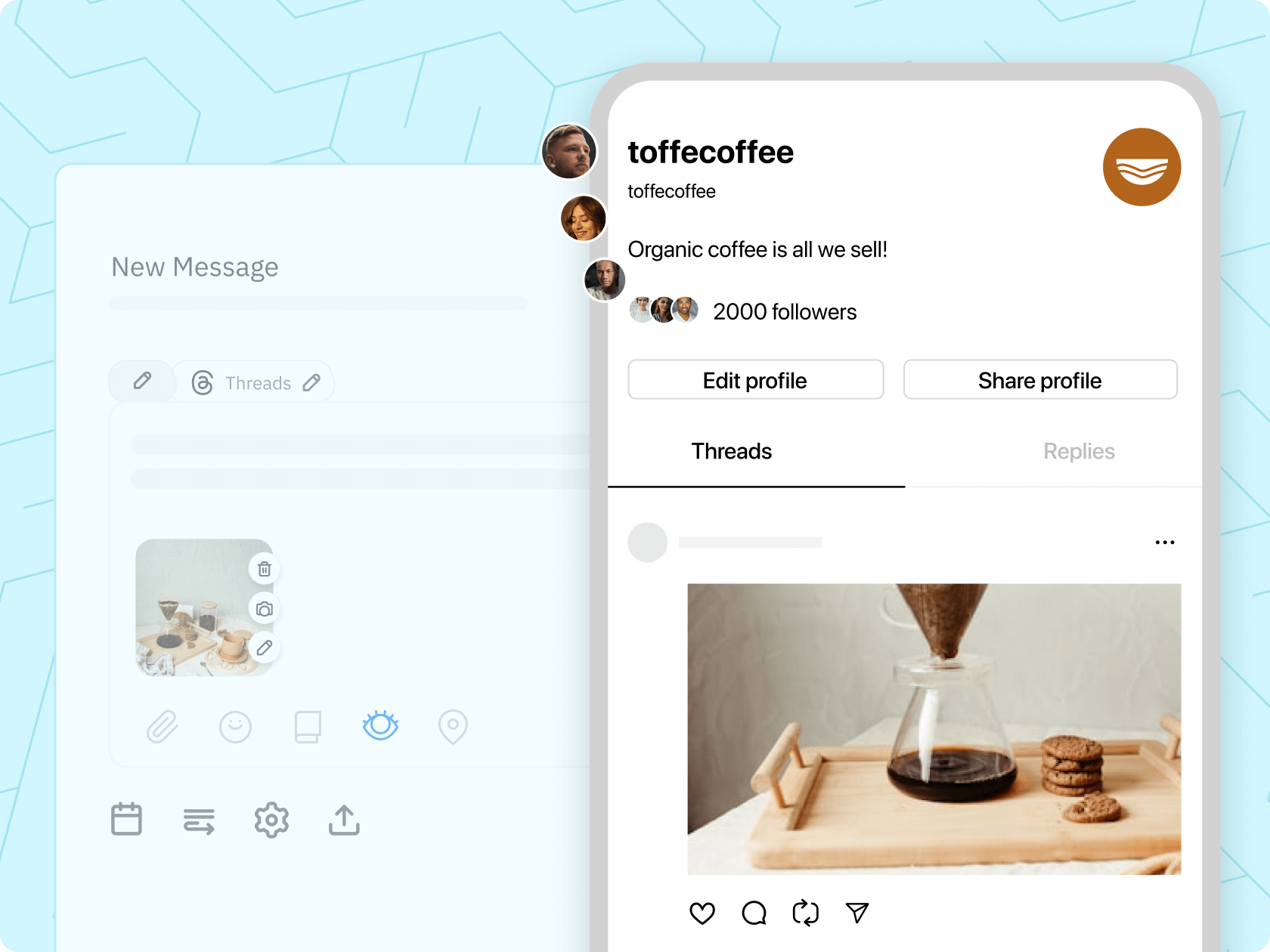
How to Schedule Threads Posts With Sendible
Threads vs X: FAQs
Which is better for engagement: Threads or X?
Engagement quality differs significantly between platforms. Threads typically generate more meaningful, sustained conversations. Yes, the overall volume is still low, but engagement rates per post are higher.
X produces higher volume interactions but often shorter, more reactive responses.
For businesses, engagement on Threads tends to be more valuable for relationship-building. This is also better because the platform is more user-friendly, enabling wider audience engagement. However, X engagement is better for immediate visibility and customer service.
Can businesses advertise on Threads?
At present, Threads advertising is only available through Meta's existing ad platform. It has limited Thread-specific targeting options. Meta is gradually rolling out more sophisticated advertising features for Threads.
Businesses can promote Threads content through Instagram Ads, but the native Threads advertising features and tools are more limited than X's established ad platform. However, if you’re planning on building organic engagement, then you’ve got time to do that before relying on ads.
Does Threads support hashtags or DMs?
In July 2025, hashtags and DMs were rolled out by Meta in the US, followed by Europe and the rest of the world in March 2026.
Instead of hashtags, you can use “tags” on Threads. The same applies to DMs. Now people can send DMs on Threads, making it as useful as Instagram for customer-service-style messaging.
Can I schedule posts on Threads and X using social media tools?
Yes, several social media management apps, including Sendible, Hootsuite, and Buffer, now support social media scheduling for Threads. This is in addition to a long-standing X scheduling ability.
How do I measure success on each platform?
Focus on engagement rate and conversation quality on Threads, especially for short-form content.
Tracking reach, impressions, and real-time response time for X is more useful, particularly when considering the web version and identifying the main differences in effectiveness between the two platforms. Use platform-specific analytics tools and Twitter management software to measure performance comprehensively.

Try Sendible free with 14-day free trial.
Leverage Sendible’s extensive integrations to create, schedule, publish, and engage with your posts seamlessly.

Text copied!