

Imagine a potential renter walks past your competitor’s apartment complex on a Saturday afternoon. They glance up at the building, maybe slow down for a second, then keep walking.
Ten minutes later, while scrolling Instagram over a coffee, they see a beautifully shot ad for your property: “Now leasing. Book a tour this weekend.”
Giving them the option to tap through and book a viewing immediately.
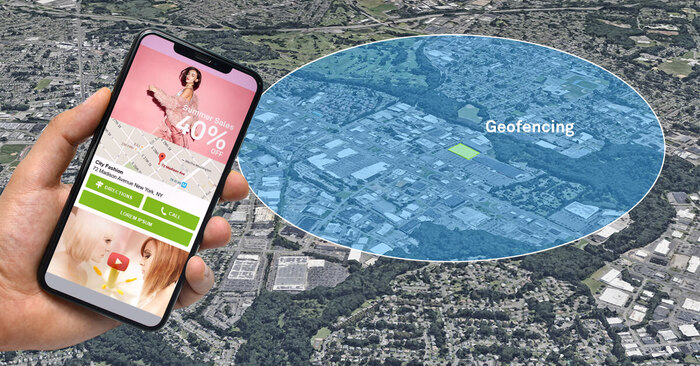
Geofencing establishes a virtual boundary, or designated area, around a physical location in the real world. When a device enters this area, targeted notifications or ads can be triggered through simple actions.
That is geofencing advertising in action.
For property managers, geofencing represents a fundamental shift in how rental marketing and advertising work, and the results they get from it. Property is physical; there’s no getting away from the fact that location is crucial. Until the arrival of geofencing, there was no way to combine physical presence with digital tactics.
In this article, we look at how to make geofencing work for property managers who need to bring in more traffic, leads, and tenants.
Key takeaways: Understanding geofencing advertising
- Geofencing creates a virtual boundary around a physical location and serves targeted ads to mobile devices that enter, exit, or linger within it.
- Geofencing uses a combination of GPS, Wi-Fi, and cellular data to work.
- Entry, exit, and dwell triggers let property managers reach renters at the exact moment they are demonstrating intent.
- The three most effective hyper-local strategies for property managers are competitor viewings, event-based targeting (e.g., universities, job fairs), and lifestyle filtering (e.g., gyms, premium grocery stores).
- Geofencing can be used in a Fair Housing compliant way by targeting locations and behaviours rather than protected demographic characteristics.
- Walk-in conversions and cost per lease (CPL) are the metrics you need to track.
- Combine geofencing with a consistent social media content calendar that a scheduling tool like Sendible can help you or a marketing team manage.
Now, let’s get into all of this in more detail.
Property management AI social media assistant
The mechanics: How geofencing triggers your social ads
Geofencing works by creating a virtual perimeter — a “fence” — around a specific geographic area.
The specific area could be as large as a postcode or as small as a single building.
When a mobile device enters, exits, or lingers within that boundary, it triggers a pre-set advertising response:
- A social media ad (usually Instagram, but could also be Facebook or even Google Ads)
- A display banner
- Or a push notification begins serving to that device (usually an SMS or WhatsApp).
The technology that enables geofencing combines GPS data, Wi-Fi triangulation, and cellular network signals. Most modern smartphones broadcast all three simultaneously, allowing geofencing platforms to pinpoint a device’s location with reasonable accuracy, usually within a few metres in urban environments.
In addition, Bluetooth and RFID technologies are often used in geofencing to connect devices and send ads or notifications.
At the same time, geospatial data helps implement geofencing by mapping and scanning the area for suitable devices.
Three core geofencing triggers
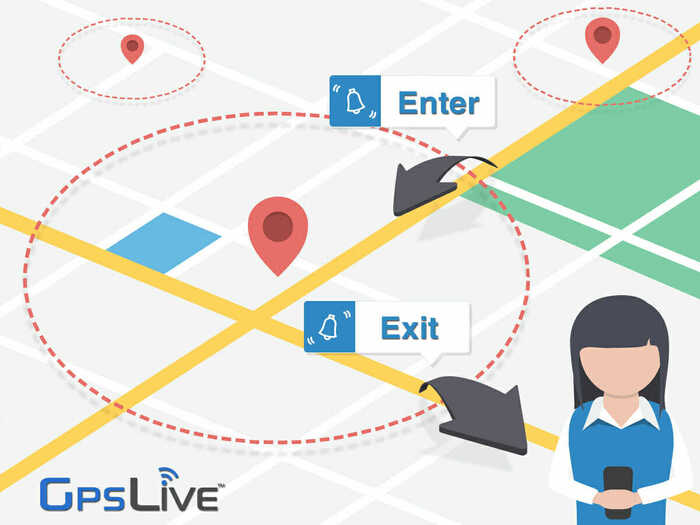
- An Entry trigger fires the moment a device crosses into your defined boundary. It’s useful when targeting competitors’ properties or high-footfall (like city centers and near university campuses) areas where you want immediate visibility.
- A Dwell trigger is the most valuable for property managers: it only activates after a device has remained within the fence for a set period — say, five or ten minutes — filtering out people who simply walked past and focusing on those who are genuinely engaging with a location.
- An Exit trigger activates when someone leaves a location, making it well-suited for retargeting people who have attended an open day or visited a rival complex.
Geofencing marketing often leverages SMS, text messages, and programmatic advertising to reach specific audiences and target consumers at the right time and place.
Why social media managers are swapping broad targeting for geofencing
Traditional social media demographic targeting, based on age ranges, interest categories, and income brackets, requires constant monitoring. Most social advertising providers and management teams don’t have the time or capacity.
For many teams, asking them to also optimise granular demographic targeting on top of everything else they do is genuinely unsustainable. Even with the help of AI tools.
Geofencing solves a specific part of that problem by cleverly zeroing in on the location. In property marketing, that’s one of the most important buying signals. Not everyone in the area is looking to rent or buy a particular property, but you can be guaranteed that a percentage of them are interested.
Property management content calendar template
Geo-targeting logic essentially runs itself — you define the location, set the triggers, and the platform does the heavy lifting for you. You just need to be clear on the monthly budget and triggers to prevent overspending.
A geofencing marketing campaign can be more effective than other digital marketing channels because it delivers highly localised, personalised messaging to potential customers within specific geographic areas.
Using analytics tools to track top metrics from your geofencing campaigns helps refine your marketing strategies and improve future campaign iterations. Additionally, integrating geofencing with social media marketing campaigns can create a cohesive strategy that enhances overall brand engagement.

Geofencing technologies: The tools powering your campaigns
Geofencing marketing is powered by a sophisticated blend of technologies that enable property managers to deliver highly targeted advertising campaigns to mobile users in real time.
At the heart of these campaigns are GPS, Wi-Fi, and cellular data — three pillars that enable businesses to create virtual boundaries around any location. This can be anywhere from a single apartment building to an entire neighborhood.
Geofencing software — like GeoComply, AirDroid Business, or Bluedot — is the engine behind these campaigns. In most cases, because geo-location ad campaigns are more complex to run than social or PPC-based campaigns, real estate managers and portfolio organisations outsource this to specialist geofencing advertising agencies.
Social media ads are another powerful component of geofencing marketing. Implementing geofencing campaigns is straightforward with the right tools. Let’s look at the sort of strategies that work when implementing geofencing campaigns.
3 Hyper-local strategies for property management teams
Below are the three most successful approaches for geofencing campaigns.
1. Competitor conquest: target rival buildings
The most direct application of geofencing for property managers is to draw a fence around a competitor’s development and target anyone who visits. This is known as competitor conquesting, which involves setting a geofence around a competitor's location to attract their customers by highlighting the advantages of your own properties.
A well-timed ad in this context does not need to be aggressive. Something as simple as “Still searching? We have availability and no admin fees — book a tour today” is enough to insert your property into a comparison they are already making.
2. Event-based geofencing
Graduate movers and job-switchers are two of the highest-intent renter demographics in any local market, and both tend to cluster at predictable physical locations at predictable times.
This strategy works well for properties within commuting distance of major employers or campuses. The creative angle here should lean into the transition — something like “Starting a new chapter in [city]? Your next home is five minutes from [employer/campus]” is both relevant and low-pressure.
Additionally, location-based offers — such as discounts or promotions — can be sent to prospects near your property to encourage them to stop by and learn more.
3. Lifestyle filter
If your property is positioned at the premium end of the market, broad location targeting around your building will capture a wide range of people, many of whom are not your target tenant.
A more surgical approach is to fence locations that act as demographic proxies: a Whole Foods, a boutique fitness studio, a golf club, or a business lounge.
The people who regularly visit these locations are self-selecting into a lifestyle bracket, and if your property matches that bracket, you are targeting qualified prospects. Helping you reach target consumers who are more likely to be interested in your property.
Geofencing also enables businesses to track user interactions and gather valuable data about customer behavior and preferences, which can inform future marketing strategies.
Is geofencing Fair Housing compliant?
This is the question property managers ask most often, and it deserves a clear answer:
Geofencing can be used in a Fair Housing-compliant way, but it requires deliberate setup and ongoing attention.
The Fair Housing Act prohibits discriminatory advertising — including digital advertising — based on protected characteristics such as race, national origin, religion, sex, disability, or familial status.
Hyper-local targeting is not the main risk, but how the fences are drawn. Targeting a specific area with the intent to exclude or include residents based on its demographic composition could constitute a Fair Housing violation.
When in doubt, consult a Fair Housing compliance specialist before launching campaigns in new markets.
How to manage geofencing campaigns without burning out
Geofencing handles the targeting, but it delivers people to your content — and that content still needs to be planned, produced, and published consistently.
Property teams that get the most out of geofencing are those who treat it as one component of an integrated content strategy rather than a standalone tactic.
For property teams managing multiple properties or platforms, scheduling tools become essential. Sendible’s multi-channel scheduling lets property management teams plan and queue content across Instagram, Facebook, LinkedIn, and Google Business Profile (GBP) from a single dashboard — ensuring the content your geofencing audience encounters is always current, consistent, and on-brand.
Approval workflows also ensure compliance and brand sign-off do not become bottlenecks when campaign windows are time-sensitive.

Measuring success: Metrics that actually matter for property owners and managers
Vanity metrics — likes, impressions, follower counts — are not what your finance director or CFO wants to see in a leasing marketing report. The metrics that matter are those that connect to actual occupancy outcomes.
Tracking top metrics and using analytics tools in geofencing advertising can provide better insights into customer behaviour, helping real estate businesses refine their marketing and advertising strategies. Here are the metrics that matter:
- Walk-in conversions measure how many people who were served an ad within a geofenced area subsequently visited your property. Most geofencing platforms track this by cross-referencing device data from the targeted fence with data from your leasing office. It’s one of the more compelling proof points for the channel.
- Cost per lease (CPL) is the metric that contextualises everything else. If a geofencing campaign costs $800 to run and generates four signed leases, the CPL is $200 — a figure you can directly compare against your other acquisition channels.
- CPMs (cost per thousand impressions) are reported to range from approximately $6 to $15, depending on market density and targeting precision, which makes it competitive with most social media display alternatives.
Track these alongside your standard engagement data. Quickly build a clear picture of which fence locations and which creative formats are actually driving leasing outcomes — and where to reinvest accordingly.
Conclusion: Putting your property on the digital map
Geofencing is not a replacement for involved, proactive property marketing
It’s a targeting layer that makes everything else more effective. It puts your ads in front of people who are in the area, and in some cases, interested in buying, renting, or investing.
If you want to make sure the content side of your campaigns is as strong as the targeting, Sendible's scheduling and analytics tools are built for multi-channel property marketing.
Try Sendible free with 14-day free trial.
Leverage Sendible’s extensive integrations to create, schedule, publish, and engage with your posts seamlessly.

Text copied!